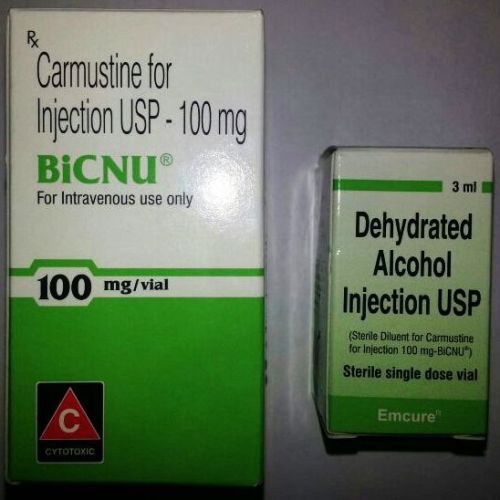
BiCNU
Carmustine 100mg Injection
Details
Purpose
Carmustine 100mg injection is used for the treatment of the following:
- Brain tumors glioblastoma
- Brainstem glioma
- Astrocytoma
- Ependymoma
- Metastatic brain tumors
- Refractory and relapsed Hodgkin’s lymphoma with other drugs
- Refractory or relapsed non-Hodgkin’s lymphomas with other drugs.
The medication comes under the brand name of Bicnu.
How does it work?
Bicnu injection is used as palliative therapy in a single dose to treat patients. The active ingredient in carmustine 100mg injection is nitrosourea which works on the tumor cells and stops the proliferation of it. The drug is packaged as a lyophilized pale yellow colour solution.
Measures and precautions
- Bicnu injection is prescribed by the doctor to treat the cancer diseases like brain tumors, gliomas, astrocytoma, etc.
- The Bicnu injection is infused into the body intravenously. No other means of infusion should be entertained instead of this.
- The injection solution is highly soluble in lipids and alcohols, but poorly soluble in water.
- The recommended dose for bicnu injection as a single agent is 100 to 200mg per m2. The infusion is done every 6 weeks to yield good results.
- Premedication is recommended before each dose of carmustine 100 mg injection. For this purpose, anti-emetics is used.
- The dose of carmustine 100mg injection is infused daily for two successive days in the doses of 75 to 100mg per m2.
- In the case of myelosuppressive drugs, lower the doses with the approval of the doctor.
- Adjustments are done for hematologic patients in the doses of this injection.
- The injection should not be used for a longer time as they are not good for the patients. Long-term dependency on this injection can cause secondary malignancies in the user body. so, it is advised to not use the injection for a long time.
- Pregnant women should not use the injection as the infusions are not good for their health.
Side-effects
- Chest pain
- Tachycardia
- Conjunctival haemorrhage
- Blurred vision
- Loss of depth perception
- Conjunctival edema
- Diarrhea
- Nausea
- Anorexia
- Vomiting
- Increase in bilirubin levels
- Increase in transaminase levels
- Increase in alkaline phosphatase levels
- Bone marrow dysplasias
- Acute leukaemia
- Renal failure
- Azotemia
- The decrease in kidney size
- Allergic reactions
Interactions
The carmustine 100mg injection interaction with cimetidine results in greater myelosuppression and with phenobarbital, it results in induced metabolism of carmustine. With this, another type of drug interaction is also seen which causes problems in the user body.
Frequently Asked Questions
1. What is BiCNU 100 mg Injection?
BiCNU 100 mg Injection contains carmustine, an anticancer medicine belonging to the nitrosourea group. It is used under the supervision of qualified healthcare professionals for the treatment of certain cancers.
2. What is BiCNU (Carmustine) used for?
BiCNU is used in the treatment of certain brain tumors, including glioblastoma, astrocytoma, ependymoma, and metastatic brain tumors. It may also be used with other medicines for certain Hodgkin’s and non-Hodgkin’s lymphomas.
3. How is BiCNU 100 mg Injection administered?
BiCNU is administered by intravenous infusion by a qualified healthcare professional. The dosage and treatment schedule are determined by the treating physician based on the patient’s condition and treatment protocol.
4. What is the recommended dose of BiCNU?
The dosage of carmustine varies according to the patient’s condition and treatment plan. Lotus International’s product information lists dosing based on body surface area and specific treatment protocols. BiCNU should only be used according to a physician’s prescription.
5. What are the possible side effects of BiCNU?
Possible side effects may include nausea, vomiting, diarrhea, loss of appetite, changes in blood cell counts, liver function changes, kidney-related problems, and allergic reactions. Patients should be monitored by their healthcare professional during treatment.