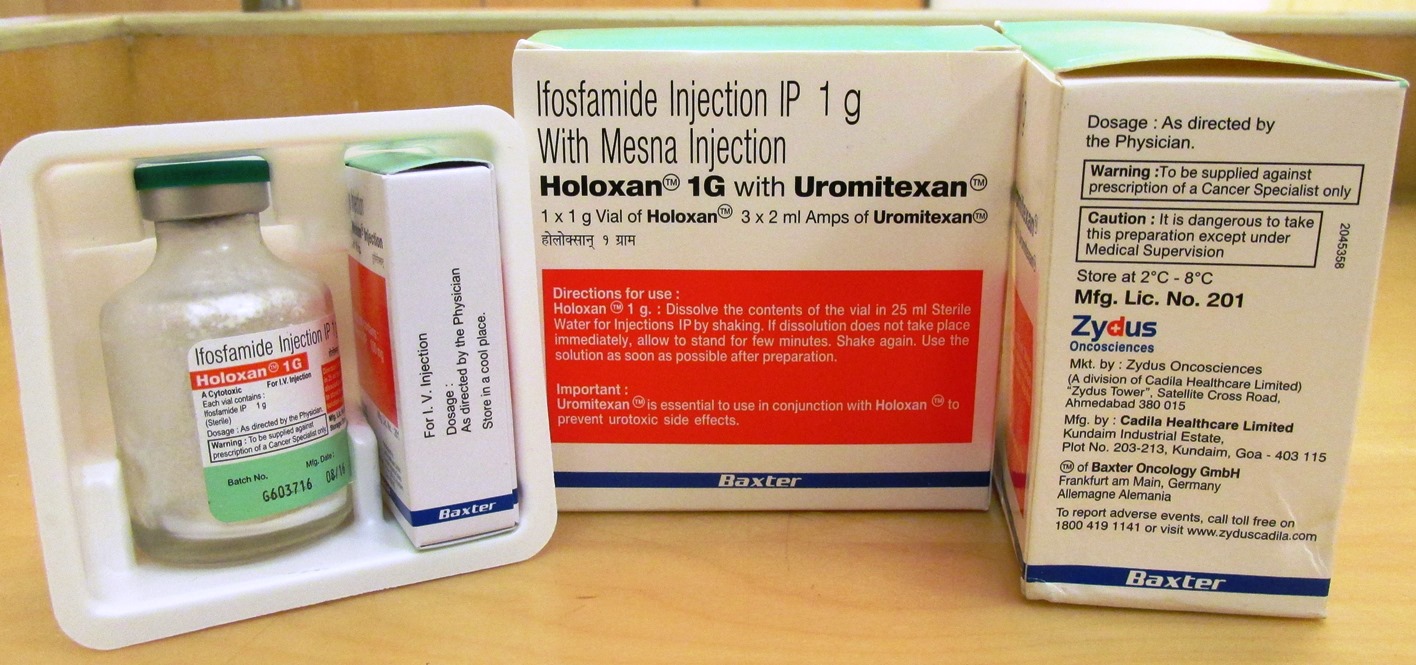
Holoxan with Uromitexan
Ifosfamide 1gm with 3 ampoules of 200mg Mesna Injection
Details
Ifosfamide 1gm with 3 ampoules of 200mg Mesna Injection is an Anti Cancer drug. It is used to treat various types of cancer such as testicular cancer. The universal name of this drug is Holoxan with Uromitexan by which it is available in pharmacies.
Purpose:
- It stops or slows down the growth of cancer cells.
- It is used for third-line chemotherapy to cure germ cell testicular cancer.
- Removes swelling and lumps in testicles.
Mechanism:
The two components Mesna and Ifosfamide are combined band converted into acrolein which is a urotoxic metabolite. This then fights the cancer cells in the body and removes lumps in testicles.
Dosage :
- As prescribed by the physician/doctor.
- Holoxan with Uromitexan should be administered intravenously of 1.2 gm dose for 5 days continuously.
- The treatment should be repeated every 3 weeks.
Side effects:
- Common side effects of Ifosfamide 1gm with 3 ampoules of 200mg Mesna Injection are nausea, diarrhea, vomiting, dizziness, fatigue, headache, restlessness, tension among others.
- Serious side effects can be Alopecia, Dermatitis, Anorexia, Cardiotoxicity, Stomatitis, Renal dysfunction, Malaise, Hypotension, Memory impairment, Tremor, Urinary incontinence, Hallucinations, Myoclonus, Pulmonary edema among others. If you experience any sign of the above-stated effects, consult your doctor right away.
Precautions and measures:
- Pediatric patients being treated with Holoxan with Uromitexan might not develop secondary sexual characters.
- Ifosfamide 1gm with 3 ampoules of 200mg Mesna Injection can affect the production of sperms.
- To help in the prevention of urinary problems, drink a good amount of water and urinate often.
- If this medication enters your eyes or touches your skin, thoroughly wash with plenty of water for at least 15 minutes and then seek medical help.
- Avoid contact with people who have communicable sufferings like chickenpox, flu, measles among others.
- Limit your intake of alcohol and marijuana as this drug is likely to make you feel dizzy and sleepy.
- If you have ever had a medical history of liver disease, anemia, radiation treatment problem, kidney disease, low blood cell counts, or blockage of urination, inform your doctor before getting on this medication.
- Do not get any vaccinations or immunizations during the tenure of Holoxan with Uromitexan injection.
- This medication might slow down the process of healing wounds.
Interactions:
A product that might react with Ifosfamide 1gm with 3 ampoules of 200mg Mesna Injection and produce negative effects in the body is Nalidixic Acid. Avoid consuming anything that is Nalidixic acid-based.
Frequently Asked Questions
1. What is Holoxan with Uromitexan?
Holoxan with Uromitexan is an oncology combination containing ifosfamide 2 g with six ampoules of mesna 200 mg injection. Ifosfamide is an alkylating chemotherapy medicine, while mesna is used as a protective agent to help reduce ifosfamide-associated urinary tract toxicity.
2. What is Holoxan with Uromitexan used for?
Ifosfamide is used in combination with other anti-cancer medicines for certain cancers, including germ cell testicular cancer in specific treatment settings. The exact indication depends on the applicable prescribing information and oncology treatment protocol.
3. What is the role of Uromitexan (Mesna) in this combination?
Uromitexan contains mesna, which helps protect the urinary tract from the urotoxic effects of ifosfamide. Mesna is specifically used to reduce the incidence or severity of ifosfamide-induced hemorrhagic cystitis.
4. How is Holoxan with Uromitexan administered?
The combination is administered under the supervision of qualified healthcare professionals. Ifosfamide is given by intravenous infusion, while mesna is administered according to the prescribed protective regimen. Dosage, timing and treatment duration are determined by the treating oncologist.
5. What are the possible side effects of Holoxan with Uromitexan?
Ifosfamide may cause adverse effects such as nausea, vomiting, reduced blood-cell counts, kidney toxicity and nervous-system effects, while mesna may also cause reactions such as nausea, headache or hypersensitivity reactions. Patients require appropriate medical monitoring during treatment.