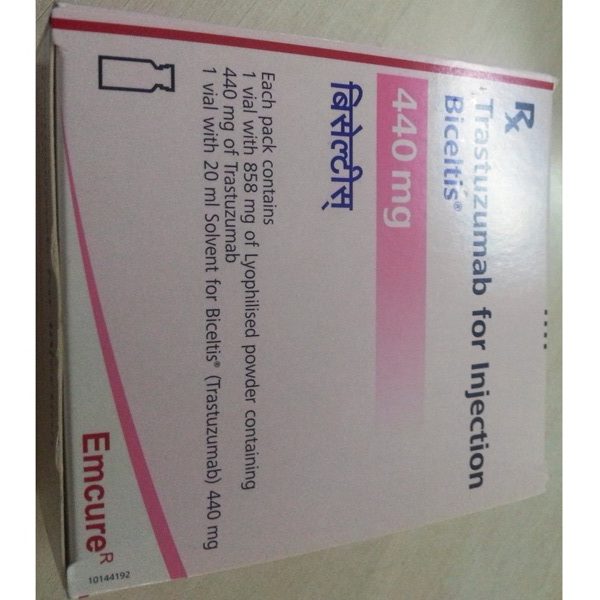
Biceltis
Trastuzumab 440mg Injection
Details
Purpose
Trastuzumab 440mg injection is used for the treatment of breast cancer, multiple myeloma, and ovarian cancer. The injection is used as an adjunct treatment for cancer. The medicine is also helpful in the treatment with medicines like doxorubicin, cyclophosphamide, paclitaxel, and docetaxel. The medication comes under the international brand of Herceptin and an Indian brand name of Biceltis.
How does it work?
Trastuzumab 440mg injection comes under the category of alkylating agents. This medication works by stopping the growth of cancer cells in the user body. this medication is useful in controlling the multiplication of cancer cells.
Measures and precautions
- Trastuzumab 440mg injection is prescribed for the treatment of certain types of cancer like ovarian, breast cancer, and multiple myeloma.
- Herceptin injection is indicated for the use of adjuvant treatment.
- Biceltis injection is taken as instructed by the doctor. The medicine is taken once a day as prescribed by the concerned doctor.
- It is highly recommended to intake the trastuzumab 440mg injection with other adjuncts to reduce the chances of side-effects.
- The doses of Biceltis injection are based on the patient’s medical conditions and response towards the medicine.
- Do carefully read the instructions before consuming the injection. It is highly advised to do so.
- Avoid increasing and decreasing the doses by yourself without a doctor’s consultation. Doing so will increase your side-effects and harm the body.
- The Biceltis injection is taken for atleast several months to observe the changes in the body.
- Do not get vaccinated while on use of this injection. Do avoid meeting with people who have taken the flu vaccine.
- Tell your doctor about any kind of allergies you have before taking the medication.
- In case of having kidney problems, do state all abnormalities before intaking the injection.
- If an overdose situation happens, the doctor should be contacted immediately.
Side-effects
- Vomiting
- Nausea
- Lip sores
- Mouth sores
- Diarrhea
- Loss of appetite
- Temporary hair loss
- Shortness of breath
- Symptoms of liver damages
- Stomach pains
- Dark urine
- Yellowing of skin
Interactions
Drug interactions are observed with this injection is of prescription type or non-prescription type. Always take the advice of the doctor for starting and stopping any kind of other drugs with this injection. This will ensure minimum side-effects in the body. nalidixic acid can be taken with this injection.
Frequently Asked Questions
1. What is Biceltis 440 mg Injection?
Biceltis 440 mg Injection contains trastuzumab, a monoclonal antibody used as an anticancer medicine. Lotus International lists Biceltis as an Indian brand corresponding to the international brand Herceptin.
2. What is Biceltis used for?
Biceltis (Trastuzumab) is used in the treatment of certain HER2-positive cancers, particularly certain types of breast cancer. Its use depends on the patient’s diagnosis and treatment plan prescribed by an oncologist.
3. How does Biceltis (Trastuzumab) work?
Trastuzumab targets the HER2 protein found on certain cancer cells. By binding to HER2, it can help inhibit the growth and survival of HER2-positive cancer cells.
4. How is Biceltis 440 mg Injection administered?
Biceltis is administered by intravenous infusion under the supervision of a qualified healthcare professional. The dosage and treatment schedule are determined according to the patient’s condition and medical response.
5. What are the possible side effects of Biceltis?
Possible side effects may include nausea, vomiting, diarrhea, fatigue, headache, mouth sores, shortness of breath, and other reactions. Patients should immediately inform their healthcare professional about severe or unusual symptoms.