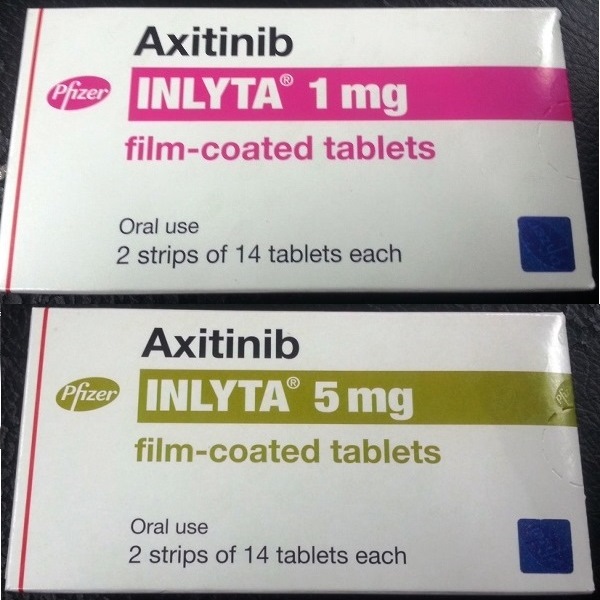
Inlyta
Axitinib 1mg, 5mg Tablets
Details
Purpose
Axitinib 1mg, 5mg tablets are used for the treatment of kidney cancer in humans. The medication comes under the brand name of Inlyta.
How does it work?
Axitinib 1mg, 5mg tablets falls under the category of anti-cancer medications. The tablets work by blocking the action of abnormal protein of cancer cells which signals cell growth. In short, the cancer cells’ growth becomes stunted with the use of Inlyta tablets.
Measures and precautions
- Inlyta tablets are prescribed for the treatment of kidney cancer in the host body.
- The axitinib 1mg, 5mg tablets can be used with or without food. They are not food-dependent.
- It is advised to drink plenty of fluids with the consumption of Inlyta tablets to reduce the chances of side-effects.
- Use a good contraceptive to prevent pregnancy while on the use of this axinitib 1 mg, 5mg tablets. Pregnancy is not good for the patients
- Monitor the patients’ blood pressure regularly while taking the tablets.
- Inform the doctor if you are having any low blood pressure symptoms.
- Do not try to increase or decrease the doses by yourself. It may lead to severe issues in the body.
- Pregnant women should not take these medicines as they are harmful to them.
- Do not overdose on the Axitinib 1mg, 5mg tablets, this leads to serious problems.
- Breastfeeding women should also avoid the usage of these pills, they are harmful to the baby and mother.
- If the side-effects or allergies persist for a longer time, then the concerned doctor should be reported immediately.
- Consume the pills at the regular time as instructed by the doctor to observe better results.
- Avoid the consumption of alcohol when you are consuming the pills. The interaction is harmful.
Side-effects
- Joint pains
- Loss of appetite
- Difficulty in speaking
- Painful blisters of hands and feet
- High blood pressure
- Vomiting
- Taste change
- Inflammation of the mouth
- Abdominal pain
- Constipation
- Cough
- The decrease in thyroid hormones
- Dry skin
- Diarrhea
- Headache
- Bleeding
- Trouble in breathing
- Rashes
- Blood in stools
- Nausea
- Protein in urine
Interactions
Some interaction reactions are seen with other types of drugs. Hence, it is advised to not use such drugs which reduces the effectiveness of the tablets.
Storage
Keep the tablets in a cool place at a normal room temperature. do not try to freeze the medication as it is not good for the effectiveness of the medicine.
Frequently Asked Questions
1. What is Inlyta?
Inlyta is an anti-cancer medicine containing axitinib, a tyrosine kinase inhibitor. It works by targeting signaling pathways involved in the formation of new blood vessels that can support tumor growth. Inlyta is available as oral film-coated tablets.
2. What is Inlyta used for?
Inlyta (axitinib) is used in the treatment of advanced renal cell carcinoma (RCC). Depending on the applicable prescribing information, it may be used alone after previous systemic therapy or in combination with medicines such as pembrolizumab or avelumab for first-line treatment of advanced RCC.
3. How does Inlyta work?
Axitinib inhibits several receptor tyrosine kinases, including VEGFR-1, VEGFR-2 and VEGFR-3. Blocking these pathways can reduce signaling involved in angiogenesis, or the formation of new blood vessels that tumors may require for continued growth.
4. What strengths of Inlyta are available?
Inlyta is available in 1 mg and 5 mg film-coated tablets. The appropriate strength and dosage are selected by the treating healthcare professional based on the patient’s treatment plan and tolerability.
5. How is Inlyta taken?
Inlyta is taken orally, generally twice daily at approximately 12-hour intervals. It can be taken with or without food and should be used exactly as prescribed. The dosage may be adjusted by the treating physician according to treatment response and adverse reactions.